Tucked into the shadows of the magnificent Machu Picchu in Peru, looms the intriguingly named Huayna Picchu, a peak that whispers tales of the ancient Inca civilization. The plunges into the depths of this elusive Inca jewel. From its intimidating terraces to the intricately constructed temples, Huayna Picchu is a treasure trove of archaeological and cultural wonder.
Huayna Picchu, or ‘Young Peak’ in Quechua, has long stood as a silent sentinel over the Sacred Valley, holding secrets from a time when the Inca Empire, known for its architectural brilliance, engineering marvels, and holistic approach to nature, held sway over the Andean highlands. Through this exploration, we hope to decode the hidden narrative encapsulated within the weather-beaten stones of this formidable mountain.
Unraveling the mysteries: Huayna Picchu’s intriguing history
Huayna Picchu, known as “Young Peak,” stands as an imposing figure. It towers over the architectural marvels of Machu Picchu, an age-old sentinel. This peak has a unique history, steeped in ancient lore.
Historians suggest it held immense strategic importance for the Incas. Its lofty heights provided a vantage point for surveillance. Thus, this was critical in a region riddled with rival communities. The structures atop Huayna Picchu confirm this.
Furthermore, these structures provide a glimpse into the world of Inca architecture. They are uniquely designed to accommodate the mountain’s steep terrain. Despite their precarious location, they have endured for centuries. This is a testament to the Incas’ architectural prowess.
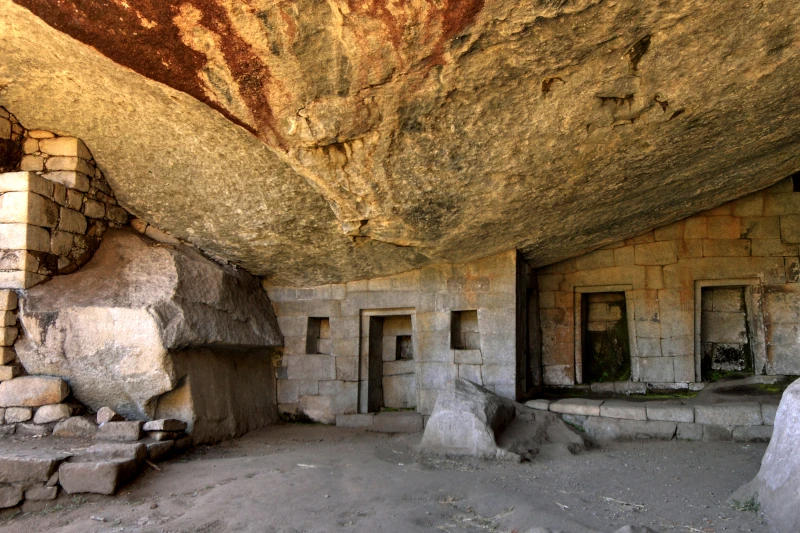
One of the most intriguing features is the Temple of the Moon. Its exact purpose remains an enigma. Some hypothesize it was a site for ceremonial practices. Others suggest it was a mausoleum. Despite the speculation, its true use remains shrouded in mystery.
The terraced gardens on Huayna Picchu also intrigue historians. They were likely used for agriculture, providing sustenance for inhabitants. They also showcased the Incas’ understanding of sustainable farming methods.
The ‘stairs of death’ lead to Huayna Picchu’s peak. Although perilous, they offer insight into the Incas’ resilience. Facing a near-vertical climb, they managed to carve a stairway. Thus, this stairway speaks volumes of their perseverance and ingenuity.
Huayna Picchu is a portal into ancient Inca civilization. It offers insight into their architectural abilities, survival strategies, and cultural practices. Despite the passing of centuries, its mysteries continue to intrigue historians and explorers alike.

Scaling the peaks: The challenging trek to Huayna Picchu
Scaling the peaks of Huayna Picchu is no easy feat. The journey is both exhilarating and challenging. It encapsulates the essence of exploration, echoing the spirit of the Inca Empire.
Additionally, a limited number of visitors are allowed each day. Only 200 people can face this trek daily, preserving the trail’s integrity. It is advisable to book well in advance.
The journey starts early, often before dawn. The first part of the hike is steep, with narrow, winding trails. You’ll need both physical strength and mental fortitude to carry on.
Despite the challenging terrain, the Inca Empire’s influence is visible. The ancient, well-preserved steps guide your way, whispering tales of the past. You can’t help but admire their resilience and resourcefulness.
Halfway up, you encounter the famed “stairs of death”. They’re nearly vertical, carved directly into the rock face. Thus, climbing them requires a head for heights and sure footing.
A series of ladders, ropes, and tight tunnels follow these stairs. They are testaments to the ingenious engineering skills of the Incas. Thus, overcoming these obstacles fills you with a sense of accomplishment.
As you approach the summit, the air thins. Each step becomes more laborious. You need to adjust your pace to cope with the altitude.
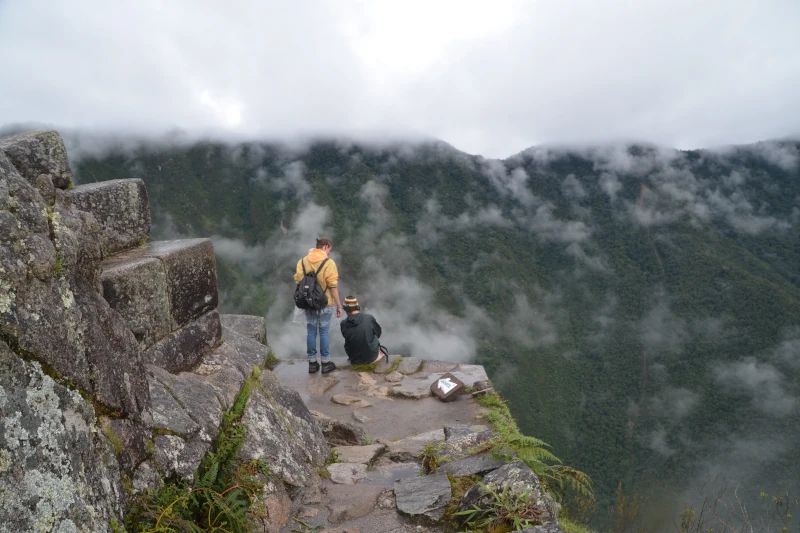
Reaching the summit, you’re rewarded with a breathtaking panorama. The view of Machu Picchu from the top is beyond compare. Thus, it’s a humbling reminder of the grandeur of the Inca Empire.
Overall, the challenging trek to Huayna Picchu is unforgettable. It leaves you with a profound appreciation of the Inca Empire and a sense of personal achievement. This journey, while physically taxing, is rewarding beyond measure.
Stone by stone: The remarkable Inca architecture of Huayna Picchu
The Inca architecture of Huayna Picchu is awe-inspiring. Despite harsh conditions, the Incas constructed remarkable structures on its slopes. Each stone is a testament to their architectural prowess.
The Inca’s precision stonework is apparent in Huayna Picchu. The stones fit perfectly without mortar. It’s a technique known as ashlar masonry. This approach ensured the structures withstood time and earthquakes.
One striking example is the Temple of the Moon. Its intricate stonework exhibits the Incas’ mastery of carving techniques. The temple has resisted erosion remarkably well.
The terraced gardens are another engineering marvel. They demonstrate the Incas’ understanding of hydrology and agriculture. The terraces prevented soil erosion and maximized farming potential.
The infamous ‘stairs of death’ exhibit the Inca’s adaptability. The near-vertical stairway, carved directly into the rock, is truly impressive. It’s a clear indication of the Inca’s capabilities in terrain utilization.
At the summit, the architectural remnants hint at its past significance. The buildings, despite their ruinous state, stand tall. They whisper tales of a once-thriving civilization.
The architecture of Huayna Picchu showcases Inca ingenuity. The stones, shaped and placed with precision, resist time and the elements. Furthermore, they remain as symbols of an extraordinary civilization.
After experiencing Huayna Picchu, why not delve deeper into Peru’s rich heritage? The Waqrapukara Stargazing Tour offers an unforgettable celestial spectacle. Or, witness the breathtaking palette of the Vinicunca Rainbow Mountain. Both offer unique perspectives into Peru’s natural and cultural wealth. These experiences, like Huayna Picchu, promise memories that will last a lifetime.