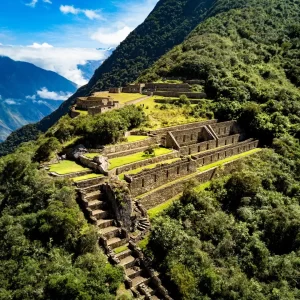
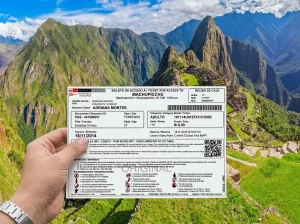
Machu Picchu is not just an ancient Inca citadel surrounded by mountains. The Historic Sanctuary of Machupicchu is also one of Peru’s protected natural areas with remarkable biodiversity.
According to SERNANP, the sanctuary is home to 75 species of mammals, 444 species of birds, 24 species of reptiles, 14 species of amphibians, and 365 species of butterflies, along with an extraordinary variety of plant species.
But here’s the important part: just because a species lives in the sanctuary doesn’t mean you’ll see it during a typical visit to Machu Picchu.
Some animals are extremely elusive, others live far from the archaeological site, and many naturally avoid people. So this guide focuses on what you can realistically expect to see during your trip.
1. Animals You Are Most Likely to See
🦙 Llamas
If you visit the Machu Picchu citadel, llamas are by far the animals you are most likely to encounter.
They are commonly seen grazing around the terraces and grassy areas of the archaeological site, and they have become one of the classic images associated with Machu Picchu.
However, the fact that they are accustomed to visitors does not mean you should disturb them. The site’s visitor rules prohibit feeding animals and disturbing wildlife.
Chance of seeing them during a citadel visit: Very high.
🐭 Viscachas
The viscacha is one of the characteristic mammals of the Machu Picchu area.
This Andean rodent looks somewhat like a rabbit, although it belongs to a different animal group. It is associated with rocky environments and can be spotted in certain areas of the sanctuary.
You are not guaranteed to see one during your visit, but it is definitely an animal worth looking for, especially around rocky slopes and vegetation.
SERNANP lists the viscacha among the representative species of the Historic Sanctuary of Machupicchu.
Chance of seeing one: Possible, but not guaranteed.
2. Animals You May See With Some Luck
This is where Machu Picchu’s wildlife becomes particularly interesting.
The sanctuary has an enormous diversity of birds and mammals, but many species are difficult to detect. Your chances improve when you spend time in forested areas and trails away from the busiest tourist zones.
🐦 Hummingbirds
Hummingbirds are among the birds you have a reasonable chance of seeing if you pay attention while hiking.
The sanctuary is home to a wide variety of hummingbirds, including the Giant Hummingbird (Patagona gigas), considered the largest hummingbird species in the world.
MINCETUR includes hummingbirds among the birds that can be observed on routes around Machu Picchu.
Look around flowers, vegetation and forest edges, and remember that watching quietly is often more effective than simply walking through the area.
🐦 Andean Cock-of-the-Rock
The Andean cock-of-the-rock (Rupicola peruvianus) is one of the most iconic birds in the sanctuary and the national bird of Peru.
Don’t expect to find one casually perched inside the archaeological site. Your better opportunities are in forested areas and natural areas around Machu Picchu.
Studies and management documents for the sanctuary have recorded the species along the route between Puente Ruinas and Mandor Valley, as well as at several known leks, where males gather for courtship displays.
Chance of seeing one: Possible, but highly dependent on location, time and conditions.
🦌 Deer
Several species of deer occur in the sanctuary, including white-tailed deer, dwarf deer, and other species recorded through wildlife research.
SERNANP has also documented the presence of gray brocket deer through camera-trap monitoring in different parts of the sanctuary.
These animals are much harder to spot than llamas or viscachas. If you encounter one, it is more likely to happen while hiking through natural areas than inside the archaeological site.
🦆 Torrent Duck
The torrent duck (Merganetta armata) is one of the characteristic water birds of the sanctuary.
It is associated with mountain rivers and fast-flowing streams. SERNANP lists it among the representative wildlife species of Machupicchu.
If you spend time near suitable rivers and streams, you can try looking for them among the rocks and rapids.
3. The Hardest Animals to Spot
This is where it is important to keep your expectations realistic.
The fact that a species is recorded in Machu Picchu does not mean that it is commonly seen by tourists.
🐻 Spectacled Bear
The spectacled bear (Tremarctos ornatus) is probably the most iconic mammal in the sanctuary.
SERNANP considers its conservation an important objective of the protected area and continues to conduct research and monitoring on the species. In 2026, for example, SERNANP reported the use of satellite collars to study spectacled bears in the Historic Sanctuary of Machupicchu.
But there is a huge difference between living in Machu Picchu and being easy to see during a visit.
Spectacled bears are wild animals and can be extremely difficult to locate. You should never visit Machu Picchu expecting to see one.
Chance of seeing one during a normal tourist visit: Very low.
🐆 Puma
The puma (Puma concolor) is also part of the sanctuary’s wildlife.
SERNANP has confirmed its presence through camera-trap monitoring, along with other mammals such as spectacled bears, ocelots, pampas cats and mountain pacas.
However, photographic evidence from camera traps does not mean that the animal is easy to see in person.
Pumas are solitary animals with large territories and generally avoid people.
Chance for a typical tourist: Extremely low.
🦅 Andean Condor
The Andean condor (Vultur gryphus) has also been recorded among the representative wildlife of the sanctuary.
However, you should not consider it a common sight during a Machu Picchu visit.
If you happen to see one soaring above the mountains, it will be one of those unexpected highlights of your trip.
4. Where You Have the Best Chance of Seeing Wildlife
Your chances depend heavily on what type of wildlife you want to see.
Inside the Machu Picchu Citadel
This is where you are most likely to encounter:
- 🦙 Llamas
- 🐭 Viscachas, depending on the area
- 🐦 Various birds and hummingbirds
Remember that you must stay on the authorized routes and follow the site’s visitor regulations.
Inca Trail
The Inca Trail crosses several ecosystems, including high-altitude grasslands, cloud forests and montane forests.
That makes it a much more interesting option for travelers who want to combine archaeology, hiking and wildlife observation.
MINCETUR notes that birds such as Andean cock-of-the-rock, hummingbirds, tanagers, oropendolas and other species can be observed along the route. Mammals such as foxes, deer, viscachas and, occasionally, spectacled bears may also be encountered.
Mandor Valley
The area around Mandor, near Machu Picchu Pueblo, is particularly interesting for birdwatchers.
The sanctuary’s documentation records the presence of Andean cock-of-the-rock in Mandor Valley and surrounding areas.
If birdwatching is a priority, natural areas like this can offer a much more interesting experience than limiting yourself to the archaeological site.
Rivers and Streams
The sanctuary’s rivers and streams provide habitat for species such as the torrent duck.
Wildlife watching here requires patience and, most importantly, avoiding any action that could disturb the animals or their habitat.
5. Andean Cock-of-the-Rock: The Bird Worth Looking For
If you are interested in birdwatching, this is probably one of the species you will most want to find.
The Andean cock-of-the-rock (Rupicola peruvianus) is the national bird of Peru and one of the most representative species of the Historic Sanctuary of Machupicchu.
The males are particularly striking, with intense red or orange plumage and a distinctive crest.
Several leks, or communal courtship sites, have been identified within the sanctuary. Some are located in areas around Machu Picchu Pueblo and Mandor Valley.
However, it is important not to treat the bird as an attraction with guaranteed sightings.
If you specifically want to look for the Andean cock-of-the-rock, your best option is to go with a guide who has experience in birdwatching and knows the authorized areas.
6. What Is the Best Time of Year for Wildlife Watching?
SERNANP considers April through October the recommended visiting season for the Historic Sanctuary of Machupicchu, while November through March is the rainy season.
However, this does not mean there is a particular season in which you can guarantee seeing a specific animal.
To improve your chances:
- Go early in the morning.
- Spend time observing vegetation instead of constantly walking.
- Bring binoculars if birds are your main interest.
- Choose routes that pass through different ecosystems.
- Ask a local guide who has experience with nature and birdwatching.
Wildlife observation requires patience. Unlike the llamas around the citadel, wild animals do not appear simply because you bought an entrance ticket.
7. How to Watch Wildlife Without Disturbing It
If you encounter an animal, remember that your goal is to observe it, not to get a photograph at any cost.
Do Not Feed the Animals
Machu Picchu’s visitor rules prohibit feeding both domestic and wild animals.
Do not give them fruit, cookies, snacks or any other human food.
Do Not Chase Wildlife
If an animal moves away, let it go.
Avoid behaviors that could disturb wildlife, including chasing, running after animals, clapping, whistling or shouting.
Do Not Try to Touch Them
Even if a llama approaches you, avoid touching it or blocking its path to get a photograph.
Stay on Authorized Trails
Wildlife watching is not a reason to leave designated visitor routes.
Bring Binoculars
For birds and small mammals, binoculars can be much more useful than trying to get physically closer.
8. So, What Can You Really Expect?
If you are visiting Machu Picchu for a few hours, don’t expect to turn your trip into a safari.
Most likely, llamas will be the easiest animals to find. You may also have the opportunity to see viscachas and a variety of birds.
If you spend more time exploring the natural ecosystems of the sanctuary, your chances increase. Routes such as the Inca Trail cross several different environments and provide opportunities to observe a much wider variety of birds and mammals.
And if you have a specific goal — such as photographing birds, looking for the Andean cock-of-the-rock or exploring the sanctuary’s ecosystems — it is worth planning your trip around nature as well as the archaeological site.
The Historic Sanctuary of Machupicchu protects far more wildlife than most visitors ever see. SERNANP currently records 75 species of mammals and 444 species of birds, but many of them remain hidden from the typical tourist.
That’s the reality of Machu Picchu’s wildlife: there is much more here than what you see, and that’s part of what makes the sanctuary so fascinating.
If nature and birdwatching are an important part of your trip, Machupicchu Luna Tours can help you choose a route and plan an experience that gives you time to appreciate the sanctuary’s wildlife as well as its archaeological heritage.