While Machu Picchu welcomes hundreds of thousands of visitors every year, another impressive Inca archaeological complex remains hidden in the mountains of the Vilcabamba range, offering a much quieter and more remote experience.
Its name is Choquequirao.
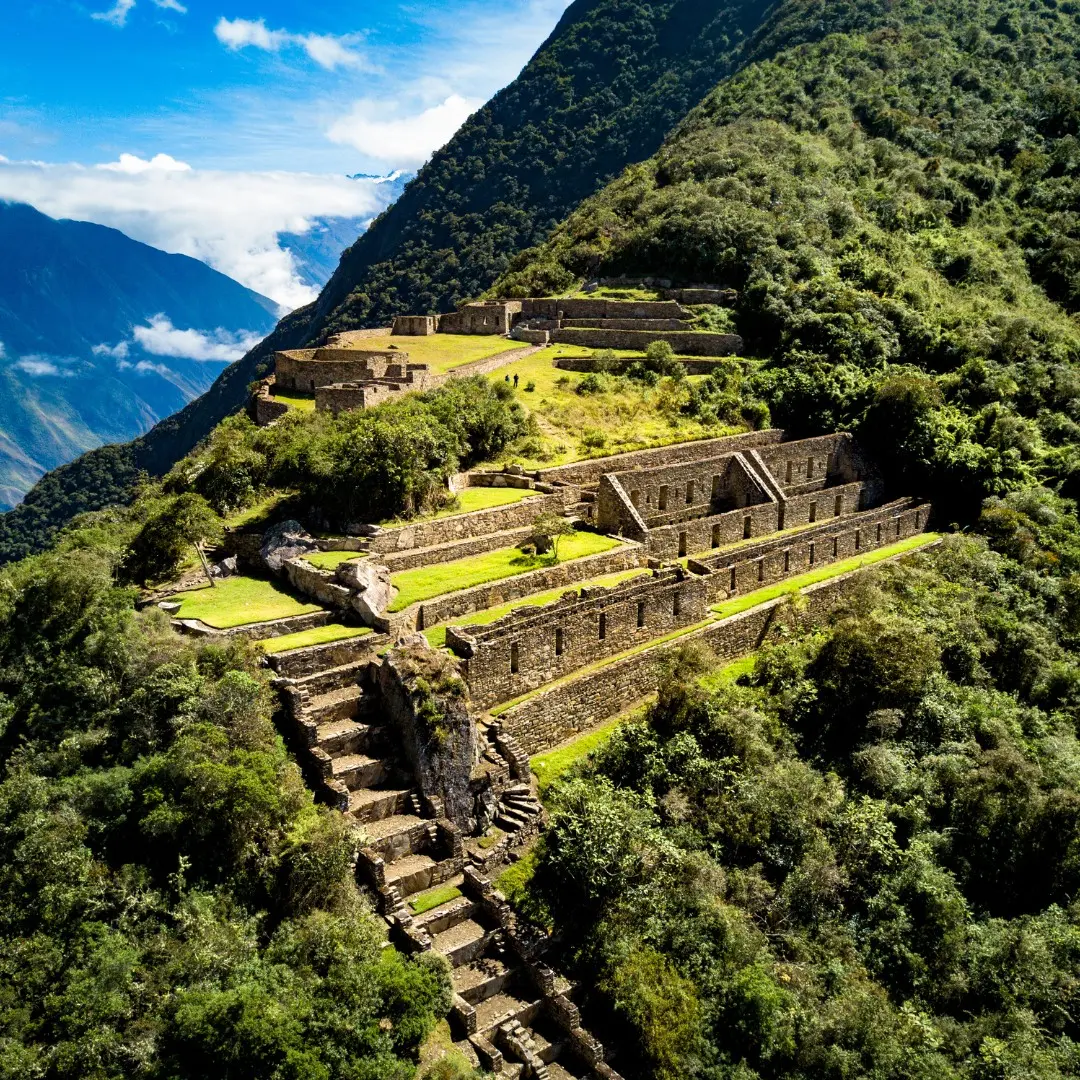
Located above the Apurímac River Canyon at approximately 3,033 meters (9,950 ft) above sea level, Choquequirao is known for its enormous agricultural terraces, ceremonial plazas, stone structures, water fountains, and the famous white-stone llama figures.
Unlike Machu Picchu, reaching Choquequirao still requires a genuine mountain trek. That is precisely why it remains one of the most rewarding trekking destinations in Cusco for travelers looking to combine archaeology, nature, and adventure.
1. What Is Choquequirao and Why Is It Called “the Other Machu Picchu”?
Choquequirao is a large Inca archaeological complex located in the Vilcabamba mountain range, above the Apurímac River Canyon in the Cusco region of Peru.
Its name is commonly translated as “Cradle of Gold,” although the etymology of the place name has been debated by specialists. For travelers, however, there is a much simpler reason why it is known as the “other Machu Picchu”: both sites feature impressive Inca architecture adapted to an extremely mountainous environment.
At Choquequirao, you can find:
- Large agricultural terraces.
- Ceremonial plazas.
- Stone structures.
- Water fountains and channels.
- Storage and residential areas.
- Roads and stairways.
- The famous terraces decorated with white-stone llama figures.
The archaeological complex covers a much larger area than the monumental sector normally visited by travelers. Archaeological research has indicated that only around 30% of the site has been excavated, meaning that many areas are still awaiting further research and conservation work.
This helps explain why Choquequirao can feel so different from other archaeological sites in Cusco: there is still a remarkable sense that much of the site remains to be explored.
2. Where Is Choquequirao and How High Is It?
Choquequirao is located in the Vilcabamba mountain range, above the right bank of the Apurímac River, in La Convención Province, Cusco region.
The archaeological complex sits at approximately 3,033 meters (9,950 feet) above sea level, although the trek crosses areas with significantly different elevations and temperatures.
This contrast is one of the most impressive features of the route.
Within a few hours, you can move from the warm and dry environment of the Apurímac Canyon to much cooler mountain landscapes.
There is no road or train reaching the monumental sector itself. Depending on the route you choose, transportation can take you to certain access points, but the final approach requires hiking along mountain trails.
The Cusco Decentralized Directorate of Culture recognizes different access routes to the Choquequirao Archaeological Park, including approaches from Cachora, Vilcabamba, and Santa Teresa.
The official visiting hours are currently 7:00 a.m. to 4:00 p.m.
3. History of Choquequirao
Choquequirao was an important Inca settlement built in a strategic location within the Vilcabamba mountain range.
Researchers have identified different ceremonial, residential, agricultural, and administrative functions throughout the complex. Its structures demonstrate the Incas’ ability to adapt architecture to extremely difficult terrain.
The history of Choquequirao is also connected to the Inca resistance following the arrival of the Spanish.
For many years, there was a theory that Choquequirao may have been one of the final refuges of the Incas in Vilcabamba. However, the site should not be confused with historical Vilcabamba, which has been identified elsewhere.
Was Choquequirao “discovered” by Hiram Bingham?
Not exactly.
Hiram Bingham visited Choquequirao in 1909, before his famous 1911 expedition associated with Machu Picchu. However, the site was already known and had been visited by explorers and researchers during the 19th century.
For this reason, it is more accurate to describe its history in terms of rediscovery and subsequent archaeological research rather than saying that Bingham “discovered” Choquequirao.
Research and conservation work at the complex continue today.
4. Why Does Choquequirao Receive Far Fewer Visitors Than Machu Picchu?
The main difference is accessibility.
Machu Picchu has a well-developed tourist infrastructure that allows visitors to reach the entrance by train and bus. Choquequirao, on the other hand, still depends on much more demanding mountain routes.
Official figures clearly show the difference in scale. Peru’s Ministry of Foreign Trade and Tourism recorded 4,743 visitors to Choquequirao in 2023, while other Peruvian government institutions have used figures of approximately 8,000 annual visitors when describing the destination.
Therefore, although it would not be accurate to claim that Choquequirao receives exactly “a few dozen visitors per day” as an official fixed figure, its visitor numbers are unquestionably much lower than those of Machu Picchu.
And you can feel that difference when you walk through the complex.
At certain moments, you may find yourself almost alone among enormous plazas, terraces, and mountain landscapes.
5. How to Get to Choquequirao
There are several routes and access points to Choquequirao. The most relevant options for travelers include:
The Classic Route from Cachora
This is the traditional route and one of the most popular ways to visit Choquequirao.
The trek begins in the Capuliyoc area, near Cachora, in the Apurímac region, and descends toward the Apurímac River Canyon before climbing toward Marampata and Choquequirao.
Depending on the itinerary, several days are normally required to complete the trek, visit the archaeological complex, and return.
It is the ideal option if you want the classic Choquequirao trekking experience and have enough time to enjoy the journey.
The Santa Teresa Route
There are also access routes from the Santa Teresa area in Cusco, connected with areas such as Yanama, Totora, and Marampata.
This alternative allows travelers to design itineraries that differ from the traditional Cachora route and is the route used for our 2-day, 1-night Choquequirao tour from Santa Teresa.
This itinerary combines road transportation with a demanding trek through the Apurímac Canyon area.
Important: trail conditions can change due to rain, landslides, or other factors. Always confirm the current condition of your chosen route before traveling.
6. Choquequirao from Santa Teresa: 2-Day Itinerary
If you want to visit Choquequirao with limited time, this is the itinerary we offer at Machupicchu Luna Tours.
Day 1: Cusco – Santa Teresa – Yanama/Totora – Apurímac Canyon – Marampata
The day begins at approximately 4:00 a.m. with pickup from your hotel in Cusco.
From there, we travel toward Santa Teresa, crossing the Sacred Valley and the Abra Málaga area before descending toward lower-altitude regions.
After breakfast, we continue by transportation toward the Yanama/Totora area.
This is where the trekking portion begins.
The first major challenge is descending toward the Apurímac Canyon. The landscape gradually changes as we move through mountains, vegetation, and dramatic elevation changes.
After lunch, the most demanding section begins: the ascent toward Marampata.
The day ends with arrival at the campsite, where we have dinner and rest before the second day.
The approximate hiking time may vary depending on the group’s pace and trail conditions.
Day 2: Marampata – Choquequirao – Santa Teresa – Cusco
After breakfast, we begin hiking from Marampata toward Choquequirao.
The visit includes the main archaeological sectors accessible along the route, including plazas, ceremonial structures, terraces, and the famous llama terraces.
The length of the visit depends on the group’s pace and trail conditions.
After exploring Choquequirao, we begin the return trek toward the point where our transportation will be waiting.
We then arrive in Santa Teresa, where there may be an opportunity to visit the Cocalmayo Hot Springs, depending on the day’s schedule and operating conditions.
Admission to Cocalmayo is separate from the archaeological site entrance and is paid independently.
From Santa Teresa, we begin the return journey to Cusco.
All times are approximate and may change due to weather, road conditions, traffic, and service operations.
7. How Difficult Is the Choquequirao Trek?
Let’s be clear: Choquequirao is a demanding trek.
The difficulty is not only related to altitude.
The real challenge is the enormous elevation gain and loss along the route.
Traditional routes descend deep into the Apurímac Canyon before climbing back toward Marampata and Choquequirao.
This means your legs must handle many hours of continuous uphill and downhill hiking, even though the archaeological site itself is not at an exceptionally high elevation for the Cusco region.
For our 2-day Santa Teresa itinerary, we recommend having a good level of physical fitness and some previous mountain-hiking experience.
You do not need to be a professional athlete, but you should be prepared to walk for several consecutive hours on uneven terrain and steep slopes.
8. What Will You See at Choquequirao?
Choquequirao is much more than a single plaza surrounded by stone walls.
The complex consists of different sectors distributed across the mountain.
Main Plaza
One of the central spaces of the complex, where you can appreciate the site’s ceremonial and urban organization.
Llama Terraces
Probably the most recognizable feature of Choquequirao.
Several terraces feature llama figures made from light-colored stones embedded into the walls.
Researchers have identified 22 llama representations distributed across 15 terraces, making this one of the site’s most unique features.
Agricultural Terraces
Choquequirao contains an impressive system of terraces built to make use of the steep mountain slopes.
These terraces also demonstrate how the Incas transformed extremely challenging terrain into productive agricultural areas.
Water Fountains and Channels
Water management was essential to the settlement’s functioning.
The fountains, channels, and hydraulic systems demonstrate the sophisticated planning and engineering used by the Incas.
Ceremonial and Residential Areas
During your visit, you will encounter plazas, temples, residences, storage areas, administrative structures, and other sectors that continue to be studied.
9. Best Time to Trek to Choquequirao
The dry season, approximately from May to October, is generally the most favorable time for trekking to Choquequirao.
During these months, rainfall is usually less frequent and trail conditions tend to be better.
However, this does not mean that rain is impossible.
Choquequirao is located in a mountainous environment with significant changes in elevation and climate, so you should be prepared for changing weather even during the dry season.
From November to April, rainfall becomes more frequent.
This can result in mud, landslides, and difficult trail conditions.
In fact, during 2026, access to the Archaeological Park was temporarily suspended beginning February 1 because of safety conditions associated with the rainy season.
The Ministry of Culture subsequently announced the reopening of the Capuliyoc–Cachora tourist route from April 15, 2026, following maintenance and trail-conditioning work.
For this reason, regardless of your travel date, it is advisable to check the official status of the access routes before starting your trek.
10. How to Prepare Physically for Choquequirao
You do not need to train like a professional mountain runner, but arriving prepared will make a major difference.
Build your endurance
During the weeks before your trip, you can include:
- Long walks.
- Brisk walking.
- Light jogging.
- Cycling.
- Cardio workouts.
Train on elevation
This is probably the most important type of preparation.
If you have access to hills, stairs, or steep trails, use them to prepare your legs for prolonged ascents and descents.
Practice with your backpack
Take several practice hikes using a backpack similar to the one you will carry during the trek.
This allows you to make sure your footwear, straps, and overall load are comfortable.
Acclimatize before the trek
Although Choquequirao itself is located at approximately 3,033 meters (9,950 feet), the route crosses different elevations.
Travelers arriving from low-altitude areas should consider spending at least a couple of days in Cusco before beginning such a demanding trek.
11. What to Pack for Choquequirao
For a trek of this difficulty, prioritize comfort, weather protection, and carrying only what you actually need.
- Trekking boots or hiking shoes with good grip.
- Trekking poles.
- Lightweight clothing for warm areas.
- Warm layers for cold nights.
- Rain poncho or waterproof jacket.
- Sunscreen.
- Hat or cap.
- Insect repellent.
- Reusable water bottle.
- Energy snacks.
- Headlamp.
- Power bank.
- Personal hygiene items.
- Passport or ID.
- Cash for personal expenses.
If you are traveling with a tour operator, confirm in advance which equipment is included and which items you need to bring yourself.
12. Choquequirao vs. Machu Picchu: Which Is Better?
Comparing Choquequirao and Machu Picchu makes sense, but not because they are exactly the same.
They offer very different experiences.
| Feature | Choquequirao | Machu Picchu |
|---|---|---|
| Access | Mountain trekking | Train, buses, and trekking routes |
| Physical demand | High | Varies depending on the route |
| Environment | Mountains, canyon, and nature | Mountains and cloud forest |
| Architecture | Large complex with multiple sectors and terraces | Iconic and highly preserved Inca citadel |
| Visitor numbers | Much lower | Much higher |
| Sense of isolation | Very high | Lower |
| Time required | Several days depending on route | Can be visited in one day |
| Best for | Adventurers and trekking enthusiasts | Travelers seeking Peru’s iconic Inca site |
If you want to visit Peru’s most famous archaeological site with a much more developed tourist infrastructure, Machu Picchu remains an essential destination.
If you are looking for a more remote, demanding trekking experience, Choquequirao can be an extraordinary choice.
And if you have already visited Machu Picchu, Choquequirao can be an excellent way to discover another side of the Inca world.
13. Is the Choquequirao Cable Car Operating?
No.
This is an important point if you are looking for updated information for 2026.
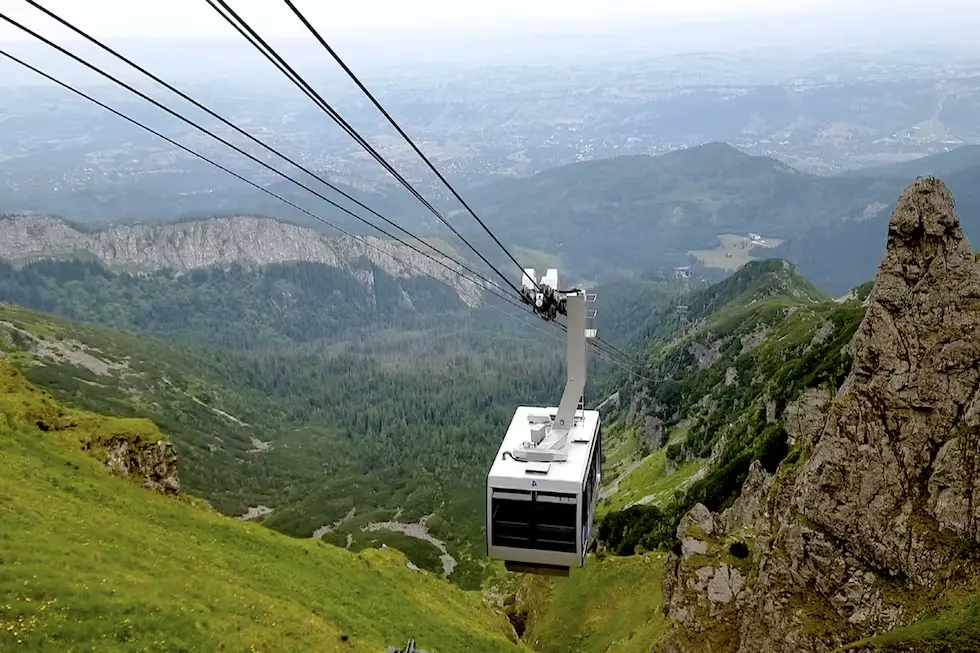
The Choquequirao cable car is not currently operating as a tourist transportation system.
There is an infrastructure project designed to improve access to the Archaeological Park through a cable transportation system.
In 2025, Peru’s investment promotion agency ProInversión reported on a project estimated at approximately US$261 million, with a projected length of more than 10.6 kilometers and the goal of significantly reducing travel time to the archaeological complex.
However, the existence of a project does not mean that visitors can currently book a cable car.
For now, you should plan your trip based on the existing access routes and trekking options.
14. Tips for Visiting Choquequirao
1. Do not underestimate the trek
Photographs can make the trail look easier than it actually is.
The elevation changes and long hiking hours are the real challenge.
2. Acclimatize before you go
Spending a few days in Cusco before your trek can help your body adjust to the altitude.
3. Check trail conditions
Conditions can change quickly, particularly during the rainy season.
Before traveling, confirm that the access route you plan to use is open.
4. Bring rain protection
Even during the dry season, you should be prepared for sudden weather changes.
5. Protect the archaeological site
Choquequirao is a protected archaeological site.
Respect the trails, walls, and structures. Do not climb on archaeological remains, paint or mark stones, and follow the instructions provided by park staff.
Drone use is also subject to authorization.
6. Consider the physical demands of the second day
On our 2-day itinerary, the second day begins after completing a demanding hike the previous day.
Getting enough rest and managing your energy is therefore essential.
7. Carry cash
In remote areas along the route, you should not rely exclusively on cards or digital payments.
15. Is Choquequirao Worth Visiting?
Yes, but it is not necessarily the right choice for every traveler.
Choquequirao is not ideal if you want to arrive quickly, walk very little, and return the same day.
Here, the journey itself is part of the experience.
You have to descend toward the canyon, overcome major elevation changes, hike for several hours, and eventually reach an Inca complex built in an extraordinary mountain setting.
That is precisely where its appeal lies.
Choquequirao still retains a sense of remoteness that is difficult to find at Peru’s most popular tourist destinations.
You do not have to choose between saying that Choquequirao is “better” than Machu Picchu or that Machu Picchu is “better” than Choquequirao.
They are different experiences.
Machu Picchu is Peru’s great archaeological icon.
Choquequirao is the adventure.
If you are looking for a demanding trek, spectacular mountain scenery, archaeology, and the opportunity to explore one of the great Inca complexes of southern Peru with far fewer visitors, Choquequirao could become one of the highlights of your trip to Cusco.
At Machupicchu Luna Tours, we offer the Choquequirao 2 Days and 1 Night via Santa Teresa, an option designed for travelers who have limited time but still want to take on the challenge of visiting Choquequirao.
You can also choose a more comprehensive experience with our Choquequirao Trek 4 Days and 3 Nights.
If you are not sure which route best suits your fitness level or the number of days available during your trip, contact us before booking and we will help you choose the right option.